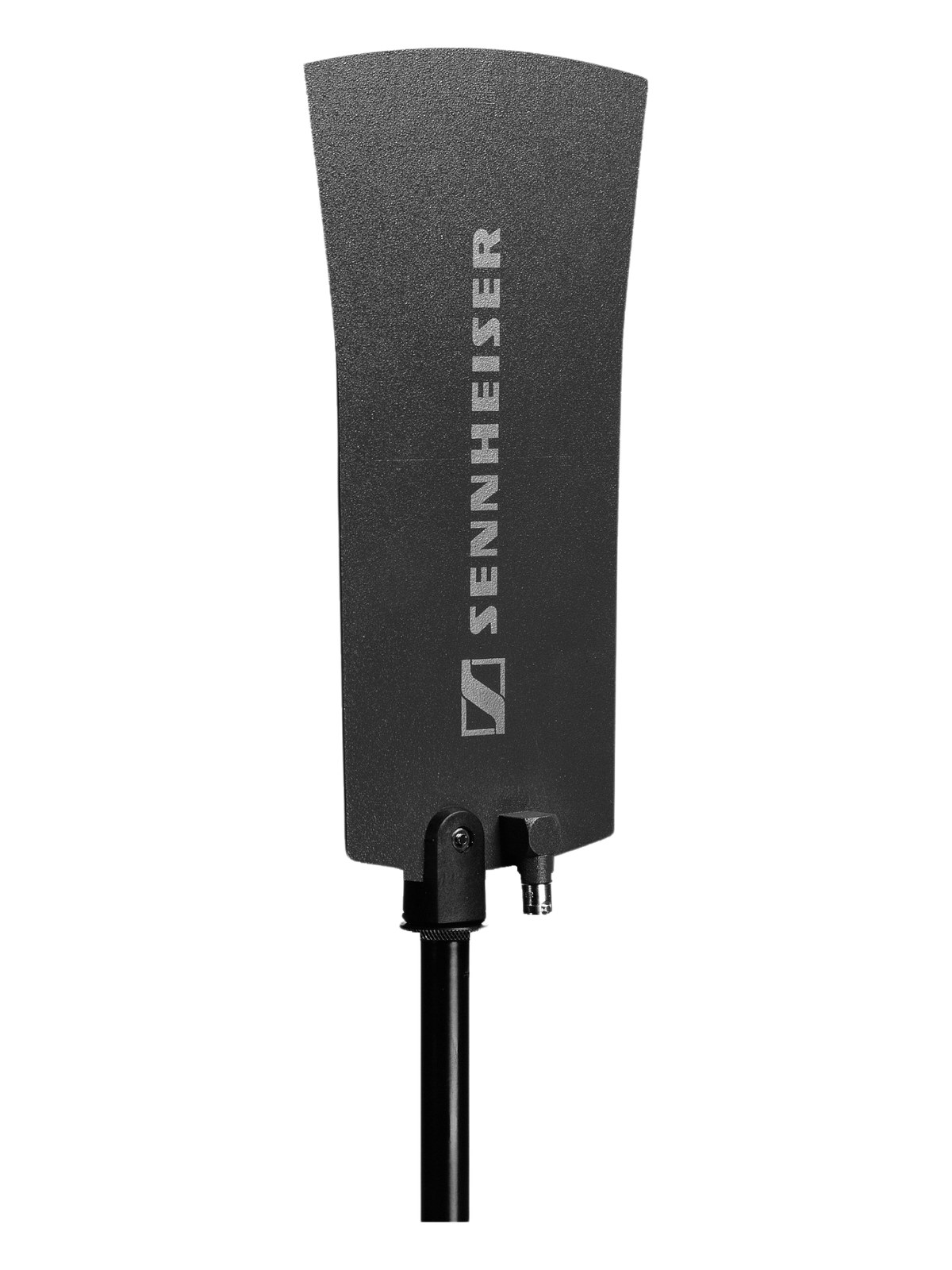
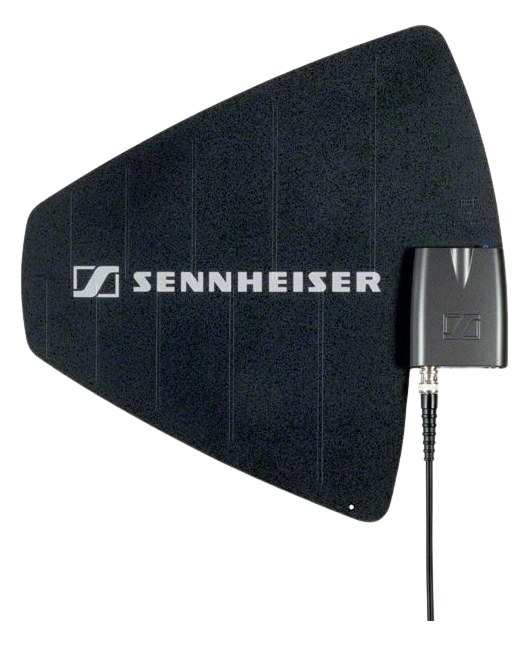
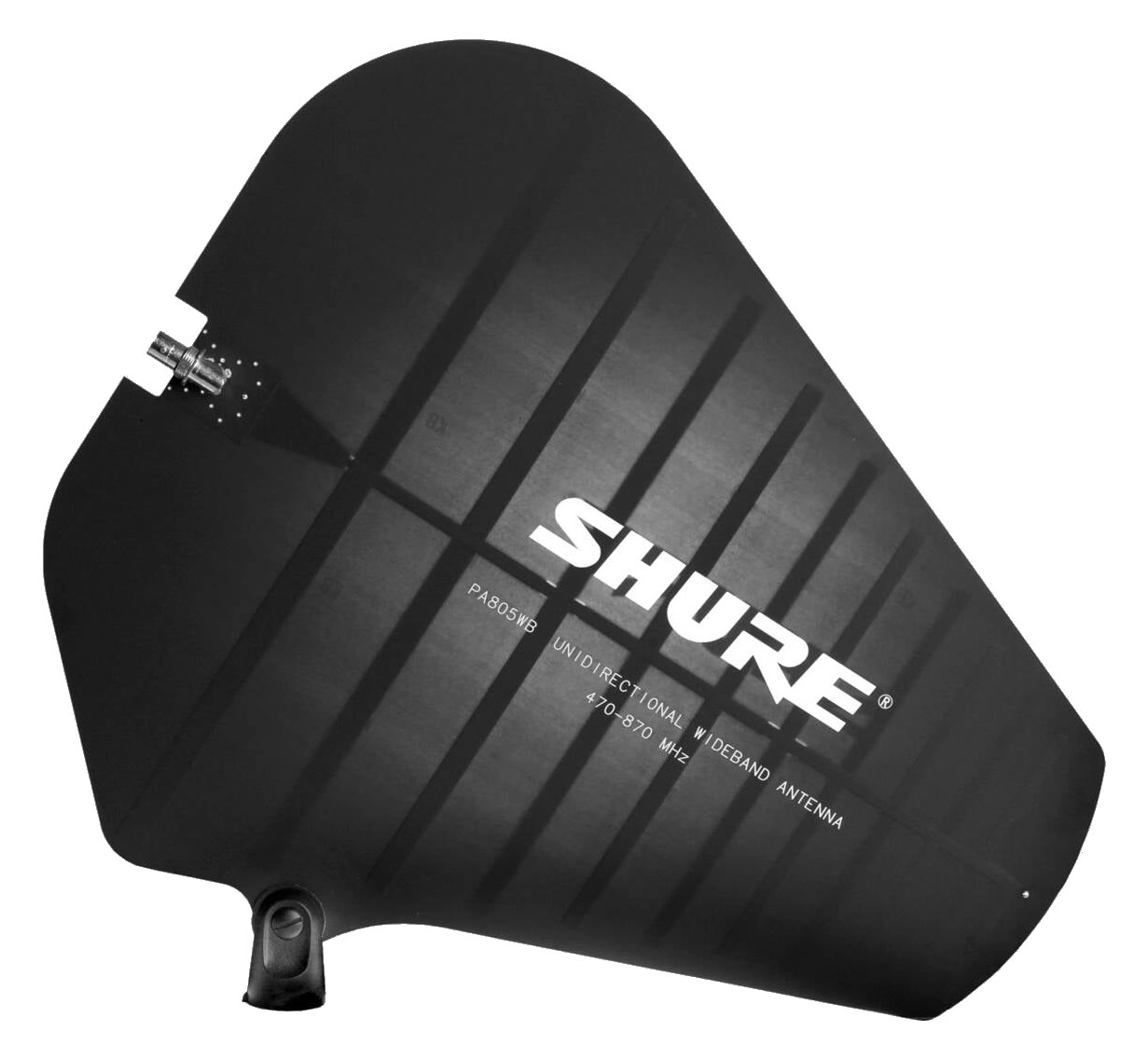
Sennheiser ADP UHF Directional Antenna
Sennheiser·Model ADP UHF·sennheiser-adp-uhf
Photos
Manufacturer product photography — the drawn faceplate above stays true to panel layout; these show the hardware itself.
About the Sennheiser ADP UHF
The ADP UHFThe TV-band radio range (roughly 470–608 MHz in the US) where serious wireless mics and IEMs live — better behaved than crowded 2.4 GHz. is the current Sennheiser passive directional — the paddleA directional antenna (paddle, LPDA, helical) aimed at the stage — focuses coverage where the performers are and rejects RF from elsewhere. designed alongside Evolution Wireless Digital, with a huge 470–1075 MHz window that runs past the classic UHF core into the 900 MHz range EW-D can use. Aim its 100-degree lobe at the stage from a stand or truss and both mic receive and IEMIn-Ear Monitor — earpieces that replace floor wedges, feeding each player their own mix. The reason this whole rack exists. transmit duties are covered by the same reciprocal element. One honest spec note: its BNCThe twist-lock coax connector used for word clock and antenna runs — it locks, so it can’t be pulled out mid-show. feed has no DC path, so it cannot power an inline antenna booster — plan cable runs accordingly.
Passive directional paddleA directional antenna (paddle, LPDA, helical) aimed at the stage — focuses coverage where the performers are and rejects RF from elsewhere., 470–1075 MHz, typ. 5 dBi, >14 dB front-to-back, ~100° apex. BNCThe twist-lock coax connector used for word clock and antenna runs — it locks, so it can’t be pulled out mid-show. female with NO DC path — it will not pass bias power to an inline booster.
I/O Ports (1)
| Port | Connector | Direction | Signal | Channels |
|---|---|---|---|---|
| Antenna (BNC, no DC path) | BNC | bidirectional | antenna | — |
Related gear